For the Santa Clara Valley CNPS potluck, I decided to try making a few teas based on native plants, two from my own garden, Hummingbird Sage (Salvia spathacea) and Yerba Buena (Clinopodium douglasii), plus some packaged Douglas-fir (Pseudotsuga menziesii) tea that was a gift.
Hummingbird Sage (Salvia spathacea)
I tried to follow the suggestions from this recipe from Meghan Steinharter, manager for the Fort Funston and the Oceana nurseries: Freshly Picked, Tasty Tea Recipes (Archive). I picked 5 leaves, one per cup.
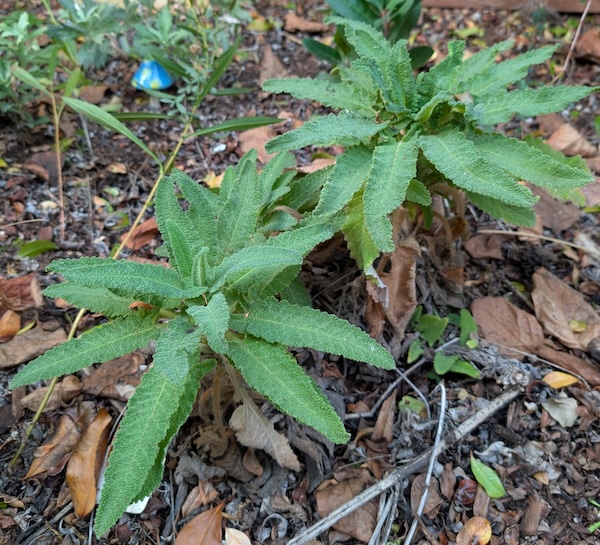
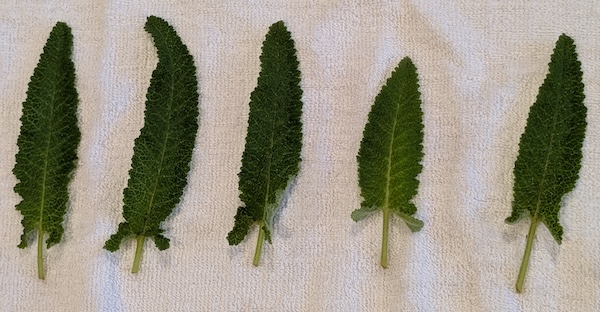
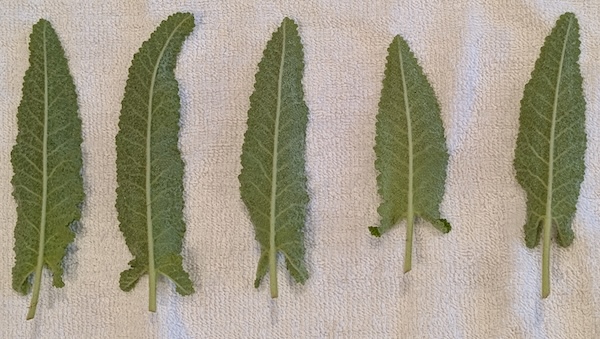
I brewed the leaves with nearly boiling water for a little over 10 minutes. At the end, there was a strong smell of hummingbird sage (pineappley) rising from the thermos, and I could see a brown tinge to the water. Pouring it into a cup though, there wasn’t any visible color in that small amount I sampled.
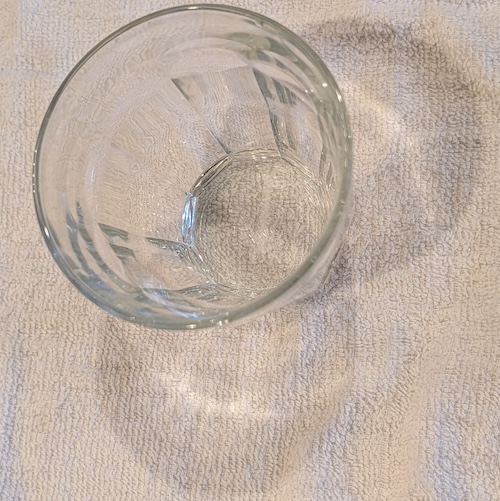
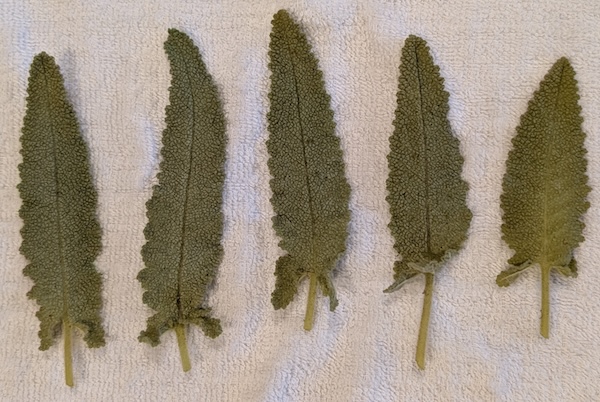
The tea was on the weak side, like the color in the cup suggested, barely different from hot water, but with a strong pineapply aftertaste. Maybe I should have let it brew for 15 minutes or more. On the other hand, I think if it got much stronger, people might not appreciate it either.
Yerba Buena (Clinopodium douglasii)
For this one, I tried to follow Judith Larner Lowry’s directions on a post from her Gardening With a Wild Heart blog: Yerba Buena Tea (Archive). (She unfortunately passed away earlier this year.)
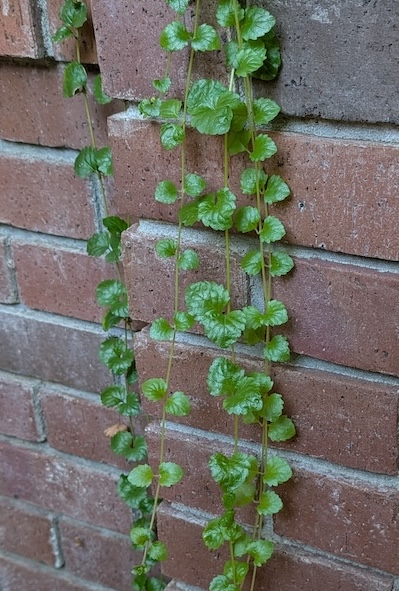
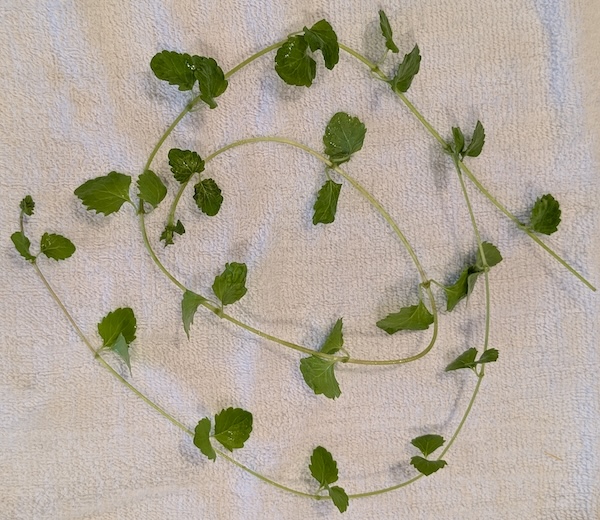
I chose a couple sprigs of Yerba Buena growing from a container perched on top of a wall. I figured that these were cleaner vs ones growing on the ground.
Larner’s directions suggested enough to fill her two hands for four quarts. I tried to scale this to 1.2 liter container I was aiming for. Maybe I should’ve been more generous with the leaves.
Again, I brewed the leaves for a little more than 10 minutes with nearly boiling water. Again, the results were a pretty weak tea.
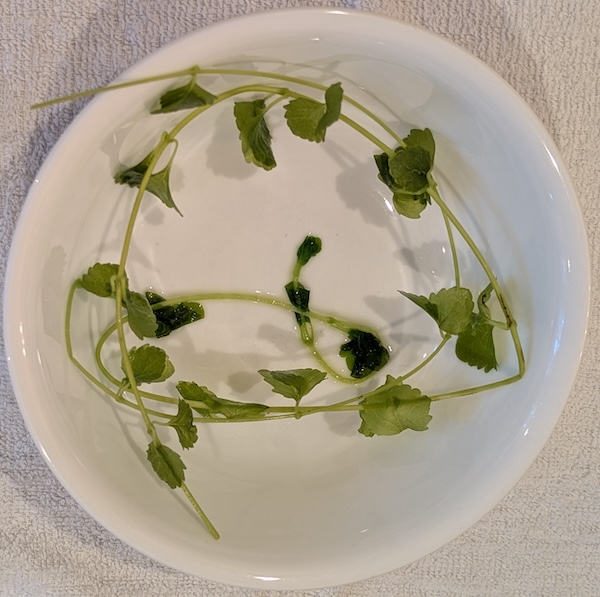
Again, most of the taste was in the aftertaste. I agree with Meghan Steinharter that this gets more “Noms” than hummingbird sage. Weak, but a very pleasant taste still.
Douglas-fir tea (Pseudotsuga menziesii)
For the Douglas-fir (Pseudotsuga menziesii) tea, I followed the suggestions on the box — one tea bag for each 8 ounces of water. Again, I used almost boiling water.
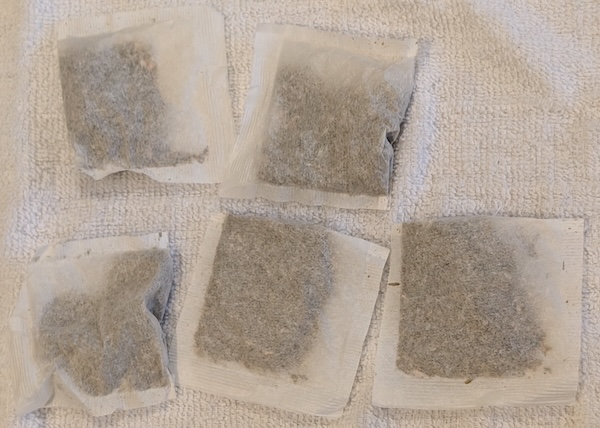
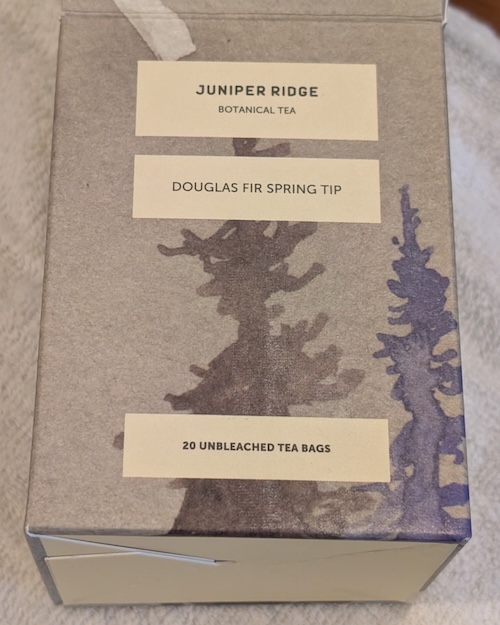
This one had some taste on the first sip. Very fruity, like um… dried plum tea? If you like fruit teas, you might like it.
Leave a Reply